What is karate? Translation and analysis of Funakoshi Gichin’s essay
 Richárd Gábor Gottner
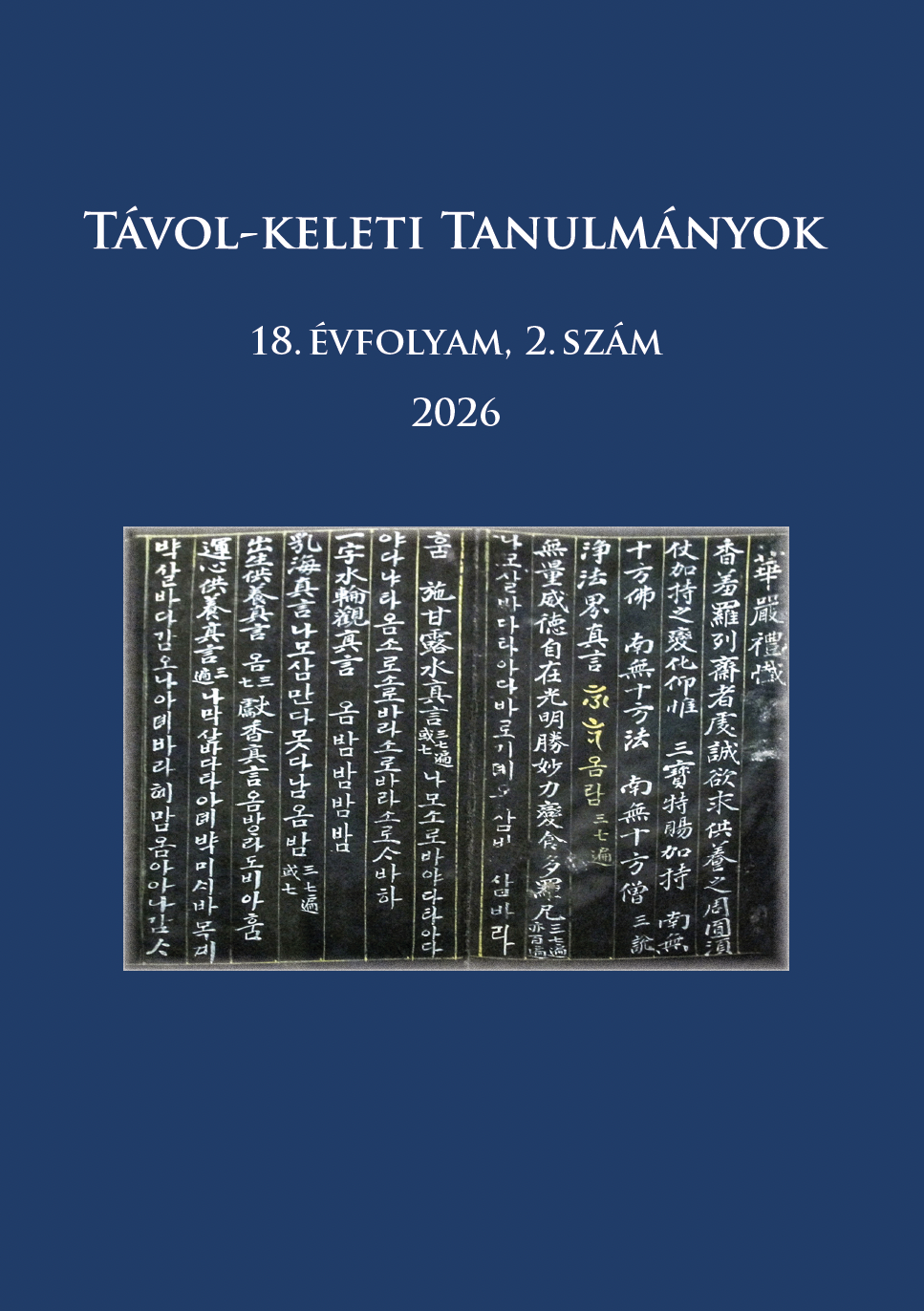
Published 2026-07-02
Keywords
- Funakoshi Gichin,
- Sakugawa Kanga,
- Kushanku,
- Anson,
- Iwa
- Wai Shin Zhan,
- Shorei-ryu,
- Shorin-ryu,
- Oshima hikki,
- karate ...More
How to Cite
Copyright (c) 2026 Richárd Gábor Gottner

This work is licensed under a Creative Commons Attribution-NonCommercial 4.0 International License.
Abstract
The aim of this paper is to present a Hungarian translation and analysis of the short introductory essay titled What is Karate? (Karate to-wa nanzo-ya? 唐手とは何ぞや), published in the 1922 book Ryūkyū Kenpō Karate 琉球拳法唐手, which is the first major publication of Shōtōkan karate 松濤館空手 founder Funakoshi Gichin 富名腰義珍.
Funakoshi’s essay is one of the earliest published Japanese-language sources on the history, masters, primary schools, and kata forms of karate, and it also offers a brief outlook on the potential future of the martial art, including the introduction of competition and modern grading systems.
In addition to the full Hungarian translation of the original text (available in the appendix), the paper provides a detailed analysis of the factual accuracy, emerging contradictions, and errors in the information presented in the essay, as well as points to consider regarding its contemporary interpretation. This is achieved through the examination of subsequent research, related works, circumstantial evidence, and other contemporary sources. The paper aims to provide more extensive information on the historical figures mentioned only briefly by Funakoshi (Sakugawa Kanga 佐久川寛賀, Kūshankū 公相君, Anson アンソン, Iwā イワー, Wai Shin Zhan ワイシンザン etc.) by incorporating other primary and secondary sources, as well as discussing the precursors and name variants of the earliest karate schools (Shōrin-ryū 昭林流/少林流 and Shōrei-ryū 昭靈流), while addressing the veracity and contemporary critiques of the essay’s claims. The essay lists the forms (kata) practiced by Funakoshi, about which the paper provides further details by incorporating additional sources and further chapters from Funakoshi’s book.
Furthermore, the paper includes research based on other contemporary primary sources. Its most significant part is the Hungarian translation of a relevant excerpt from the work titled Ōshima hikki 大島筆記, written in 1762. Additionally, the paper contains quotes and summaries of the writings of contemporary masters, including Miyagi Chōjun 宮城朝順, Mabuni Kenwa 摩文仁賢和, and Nakasone Genwa 仲宗根原和 who reflect on Funakoshi’s essay and the factual accuracy of its claims. Through this, a more complete picture can be gained about the reception of the essay and its contemporary context.
References
- Clayton, Bruce D. 2004. Shotokan’s Secret: The Hidden Truth Behind Karate’s Fighting Origins. USA: Black Bent Books – O’hara Publications Inc.
- Funakoshi Gichin 2007. Életem a karate-dō. Budapest: HUNOR Kiadó.
- Funakoshi Gichin 富名腰義珍 1922. Ryūkyū Kenpō Karate 琉球拳法唐手 [Ryūkyū ökölharc karate] Tokió: Bukyōsha.
- Funakoshi Gichin 富名腰義珍 1925. Rentan Goshin Karate-jutsu 錬膽護身唐手術 [Önvédelmi edzés a karate technikáival]. Tokió: Kōbundō.
- Funakoshi Gichin 富名腰義珍 1935. Karate-dō kyōhan 空手道教範 [A karate útjának tanítási módja]. Ōkuma: Kōbundō.
- Funakoshi, Gichin 1973. Karate-dō kyōhan: The Master Text. [Ford. Ohshima, Tsutomu]. Tokió: Kodansha International Ltd.
- Funakoshi, Gichin 1975. Karate-do: My Way of Life. Tokió – New York: Kodansha International.
- Hinatsu Shigetaka 日夏繁高 1920. Honchō bugei shōden 本朝武芸小傳. Tokió: Dai Nippon Butokukai Honbu. https://doi.org/ 10.11501/927114
- Kaibara Yoshifuru 貝原好古 1697. Yamato-koto hajime 和事始 [Bevezetés a japán dolgokba]. Edo: Kokusho sōmokuroku. https://doi.org/10.20730/100125252
- Kano, Jigoro 2013. Kodokan Judo: The Essential Guide to Judo by Its Founder Jigoro Kano. Tokió: Kodansha International.
- Kim, Richard 1974. The Weaponless Warriors. Santa Clarita: O’hara Publications.
- Mabuni Kenwa – Nakasone Genwa 摩文仁賢和・仲宗根原和 1938. Kōbō Jizai Goshin Kenpō. Karate-dō Nyūmon 攻防自在護身拳法・空手道入門 [Szabadon támadó és védekező önvédelmi ökölharc: Bevezetés a karate útjába]. Tokió: Kyōbunsha.
- Mabuni Kenwa 摩文仁賢和 1934. Kōbō Jizai Karate Kenpō. Seipai no Kenkyū 攻防自在空手拳法・十八の研究 [Szabadon támadó és védekező karate ökölharc: A Seipai formagyakorlat kutatása]. Tokió: Yōju shorin.
- Miyagi Chōjun 宮城朝順 1936. „Ryūkyū kenpō karate-dō enkaku gaiyō 琉球拳法空手道沿革概要 [A ryūkyū-i ökölharc karate-dō történeti áttekintése].” Tōka 糖華 [Cukorvirág] 1936/2, 60–65.
- Motobu Chōki 本部朝基 1926. Okinawa kenpō karate-jutsu: Kumite-hen 沖縄拳法唐手術・組手編 [Okinawai ökölharc karate technikák: A küzdelem fejezete]. Oszaka: Karate Fukyūkai.
- Nagamine, Shoshin 1998. The Essence of Okinawan Karate-do. Vermont: Tuttle Publishing.
- Nakasone Genwa 仲宗根原和 (főszerk.) 1991. Karate-dō Taikan 空手道大観 [Áttekintés a karate útjáról]. Tokió: Rokurindō shoten [utánnyomott kiadás az 1938-ban megjelent eredeti alapján].
- Quinn, Cameron 2020. The Budo Karate of Mas Oyama: Philosophical Foundations of Japan’s Strongest Fighting Art. [Second Edition]. Tamborine: Cameron Quinn Producions.
- Stevens, John 2003. A három budo mester. [Ford. Jóvér Béla]. Budapest: Hunor Kiadó.
- Tobe Yoshihiro 戸部良煕 1762a. Ōshima hikki 大島筆記 [Feljegyzések Ōshima-szigetéről]. Nisihara: Ryūkyū Daigaku fuzoku toshokan, Iha Fuyū-bunko. https://doi.org/10.24564/ih03001
- Tobe Yoshihiro 戸部良煕 1762b. Ōshima hikki 大島筆記 [Feljegyzések Ōshima-szigetéről]. Tokió: Koku bungaku kenkyū shiryōkan, Mitsui-bunko kyūzō shiryō. https://doi.org/10.20730/200017482
- Tobe Yoshihiro 戸部良煕 1762c. Ōshima hikki 大島筆記 [Feljegyzések Ōshima-szigetéről]. Kōchi: Kōchi kenritsu Kōchi-jō rekishi hakubutsukan, Yamauchi-bunko. https://doi.org/10.20730/100120856
- Tótisz András – Gulyás Péter 1983. Karate: A legendák sportja. Budapest: Sportpropaganda.
- Ujvári Miklós 1986. A délkelet-ázsiai harci művészetek. Budapest: Magánkiadás.
- Yang, Jwing-Ming 2000. Qigong – Az örök fiatalság forrása. Da Mo (Bodhidharma) híres tanításai az izmok és inak átalakításáról, valamint a velőtisztításról. Válogatott Qigong-gyakorlatok haladóknak. [Ford. Szabados Levente]. Budapest: Lunarimpex.
- Yoshida Shōhei 吉田正平 1920. Jintsu jizai: Reiniku shūyō 神通自在: 霊肉修養 [Természetfeletti szabadság: A test és lélek fejlesztése]. Tokió: Kōbundō.
- Zsolt Péter 2026. Japán-magyar karate szakszótár. Budapest: ZEN-IT Web Solutions Kft.
- Balogh András 2018. Délkelet-Ázsia történelme. Budapest: ELTE Eötvös Kiadó.
- Bartos Huba – Hamar Imre 2019. Kínai–magyar szótár II. kötet 汉匈词典 下. Budapest: Akadémiai Kiadó.
- Bishop, Mark 1999. Okinawan karate: Teachers styles and secret techniques. Rutland: Tuttle Publishing.
- Feldmann, Thomas 2025. An Annotated Bibliography of Funakoshi Gichin. Including a list of selected books and articles. Düsseldorf: Lulu Press.
- Godshaw, Alan 2015. Kata dictionary. https://alangodshaw.com/photos/%e7%9b%ae%e9%8c%b2%e3%81%ae%e5%bd%a2/ (utolsó letöltés: 2025.12.14.)
- Gottner Richárd Gábor 2020. „A japán jūdō terminológia magyar fordításának problémái: Támpontok egy szakzsargon megreformálásához.” Távol-keleti Tanulmányok 11.2: 111–151. https://doi.org/10.38144/TKT.2019.2.5
- Gottner Richárd Gábor 2022a. „A karate megismerésének tíz cikkelye: Itosu Ankō levelének fordítása és elemzése.” Távol-keleti Tanulmányok 14.2: 137–174. https://doi.org/10.38144/TKT.2022.2.6
- Gottner Richárd Gábor 2025. A japán dzsúdzsucu szakirodalmának vizsgálata a Meidzsi és Taisó korszakban. PhD-disszertáció. Budapest: Eötvös Loránd Tudományegyetem. https://doi.org/10.15476/ELTE.2025.280
- Gottner, Richárd Gábor 2022b. „A Brief Introduction to the Development of Karate-terminology” In: Petra Doma – Ferenc Takó (eds.) “Near and Far” 10/1: Proceedings of the Annual Conference of ELTE Eötvös Collegium Oriental and East Asian Studies Workshop, 2020. Budapest: Eötvös Collegium, 89–104.
- Hamar Imre 2017. A kínai buddhizmus története. Budapest: ELTE Konfuciusz Intézet.
- Hidvégi Zsófia 2020. „A ryūkyūi nyelv revitalizációja hagyományos tanórai környezetben: A tanítási segédanyagokkal kapcsolatos problémák.” Távol-keleti Tanulmányok 11.1: 113–128. https://doi.org/10.38144/TKT.2019.1.6
- Kadekaru Tōru 嘉手苅徹 2017. Creating and Developing Okinawan Karate. The significance of transitions in the term “karate” 沖縄空手の創造と展開・名称の変遷を手がかりにして. PhD-disszertáció. Tokió: Waseda Egyetem (Sporttudományi Kar).
- Kanō Sensei Biographic Editorial Committee 2009. Jigoro Kano and the Kodokan: An Innovative Response to Modernisation. Alexander Bennett ed., transl. Tokyo: Kodokan Judo Institute.
- Kerr, George H. 2000. Okinawa: The History of an Island People. Singapore: Tuttle Publishing.
- Kokuritsu Kokugo Kenkyūjo 国立国語研究所 2001. Okinawago jiten 沖縄語事典 [Az okinawai nyelv szótára]. Tōkyō: Zaimushō Insatsu Kyoku.
- Lu Jianwei 盧姜威 2015. „Okinawa karate no kata meishō nitsuite no hitokōtsu 沖縄空手の型名称についての一考察 [Egy gondolat az okinawai karate formagyakorlatainak elnevezéséivel kapcsolatban]” Ryūkyū Karate no rūtsu wo saguru jigyō chōsa kenkyū hōkokusho 琉球空手のルーツを探る事業調査研究報告書 [A ryūkyū-i karate gyökereit kereső kutatások tanulmánykötete], 81–87.
- Matrasko, Chryl 2001. Interview with Reknown Aikidoist John Stevens. https://web.archive.org/web/20080919153805/http://www.aikido-world.com/articles/JohnStevens-interview1.htm (utolsó letöltés: 2025.11.08).
- Matsui, Masato – Kurokawa, Tomoyoshi – Song, Minako I. 1981. Ryukyu: An Annotated Bibliography. Honolulu: University of Hawaii.
- McCarthy, Patrick 2016. Bubishi. The Classic Manual of Combat. Hong Kong: Tuttle Publishing.
- Oimatsu Shin’ichi 老松信一 – Ueshiba Kisshōmaru 植芝吉祥丸 1982. Nihon budō taikei. Vol. 6. Jūjutsu – Aikijutsu 日本武道大系・第六卷.柔術・合気術 [A japán harcművészetek összefoglalása. 6. rész. Jūjutsu – Aikijutsu]. Tōkyō: Dōhōsha Shuppan.
- Quast, Andreas 2016. „Creation and Creator” In: McCarthy, Patrick Bubishi. The Classic Manual of Combat. Hong Kong: Tuttle Publishing, 67–111.
- Sakihara, Mitsugu 1972. „Rykūkyu’s tribute-tax to Satsuma during the Tokugawa period.” Modern Asian Studies 6: 329–335. https://doi.org/10.1017/S0026749X00004157
- Szabó Balázs 2010. A dzsúdzsucu fogásrendszere és eszmeisége: Forrástanulmány a japán művelődéstörténethez. PhD. disszertáció, Budapest: ELTE BTK, Nyelvtudományi Doktori Iskola, Japán filológia doktori program.
- Szabó Balázs 2014. „A hadtudomány oktatása a kora-újkori Japánban.” Távol-keleti Tanulmányok 5.1–2: 125–145.
- Szabó Balázs 2016. „Bevezetés a szamurájok oktatásába: Yamaga Sokō Bukyō shōgakuja.” Távol-keleti Tanulmányok 7.2: 27–74.
- Uozumi Takashi 魚住孝至 2013. Budō no rekishi to sono seishin 武道の歴史とその精神 [A budō történelme és szellemisége]. Katsuura: Kokusai Budō Daigaku, Budō-sport kagaku kenkyūsho.
- Varrók Ilona (főszerk.) 2015. Japán-magyar nagyszótár. Budapest: Japán Stúdiumok Alapítvány.
- Watatani Kiyoshi 綿谷雪 – Yamada Tadashi山田忠史 1978. Bugei ryūha daijiten: Zóbo daikaitei 武芸流派大辞典・増補大改訂 [A harcművészeti iskolák nagyenciklopédiája: Bővített átdolgozott kiadás]. Tōkyō: Tōkyō kopii shuppanbu.
- Weng Xinhui 翁信辉 2015. „Fukken-nanken no rekishi to bunka oyobi kokunaigai denpa no kenyū »Goso-ken«, »Nan-Shōrin Goso kakuyō-ken«, »Shōtōkan-ryū«, »Gōjū-ryū« wo rei to shite 福建南拳の歴史と文化及び国内外伝播の研究 »五祖拳«, »南少林五祖鶴陽拳«, »松濤館流«, »剛柔流«を例として [A Fukien-i déli ökölharc történelme és kultúrája, valamint bel- és külföldi elterjedésének kutatása az „Öt ős ökle”, a „Déli-Shaolin Öt ős daru ökle”, a „Shōtōkan iskola” és a „Gōjū iskola” példáján keresztül].” Ryūkyū Karate no rūtsu wo saguru jigyō chōsa kenkyū hōkokusho 琉球空手のルーツを探る事業調査研究報告書 [A ryūkyū-i karate gyökereit kereső kutatások tanulmánykötete], 49–51.