
Vol. 24 No. 3–4 (2025): Approaches to Isis
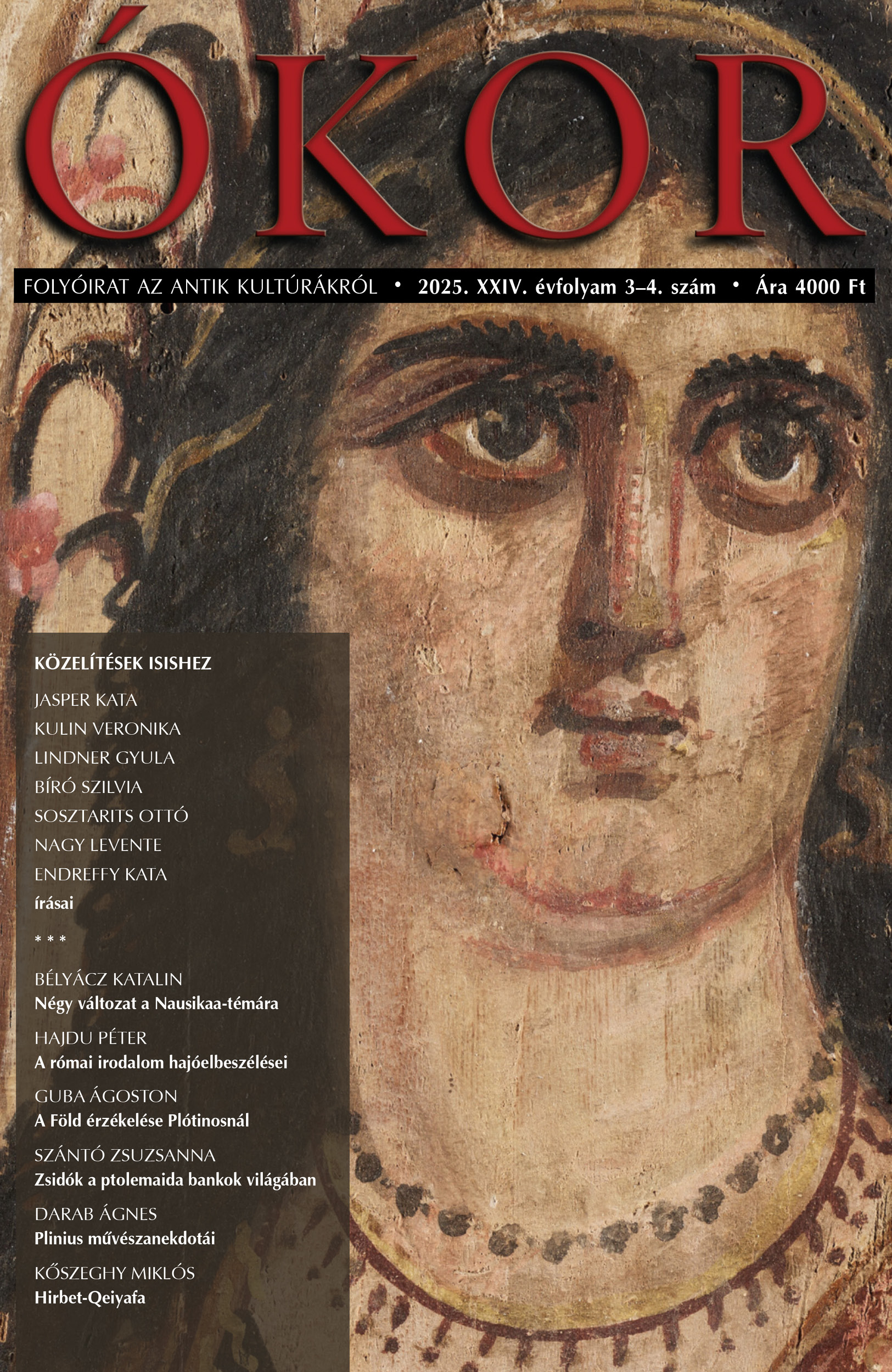
The religious cultures of the ancient Mediterranean developed through continuous interaction with one another. The cult of Isis, Egyptian in origin but embedded in new religious, cultural, and interpretative contexts across the Greek and Roman worlds, provides a particularly complex example of these processes. Its Pannonian remains, above all the sanctuary complex of Isis at Savaria, also demonstrate that the territory of present-day Hungary formed an integral part of these Mediterranean networks. The thematic section of this issue grew out of the conference Approaches to Isis – The Faces of a Mediterranean Goddess, held at the University of Pécs. Its studies examine the figure and cult of Isis from ancient Egyptian conceptions of the afterlife through Greek and Roman religious culture to her presence in Pannonia, bringing together perspectives from Egyptology, classical scholarship, archaeology, and the history of religions. The thematic section is complemented by studies addressing a range of questions in ancient literary, philosophical, artistic, social, and economic history, from the reception of the Nausicaa story and narratives of ships in Roman literature to Plotinus’ theory of perception, Ptolemaic Egypt, Pliny the Elder’s anecdotes about artists, and the archaeological problems surrounding Khirbet Qeiyafa. The Dualis section returns to the issue’s central theme by tracing transformations in the iconography of Isis. With the publication of this issue, we also remember Zsigmond Ritoók, a regular contributor to Ókor since its foundation and one of the journal’s most important intellectual supporters.
Published:
2026-09-01
